








One of the richest and most brilliant rivals of the French crown. In the 15th century, Burgundy owned not only a significant part of today’s France but also a large part of modern-day Holland, Belgium, and Luxembourg.
Probably, this is the most brilliant court in Europe of the 14th-15th centuries. In the 12th century, it was here that Gothic architecture was born. The landscapes of Burgundy are still considered some of the most beautiful in France. Burgundy wines are also well known. Among many famous “Burgundians,” we can name the likes of Victor Hugo and Gustave Eiffel, Louis Pasteur and the Lumière brothers – people whose ideas changed the way of life and thoughts of man in the 19th-20th centuries.
Vézelay. From the top of the high hill on which the temple stands, dizzying distances open up – these are the light hills of Burgundy, the Morvan nature reserve. Every turn of the road is a small masterpiece of nature. Villages, hills, fields, pastures, and forests seem to be painted by the brush of a great master…
The Basilica of St. Mary Magdalene at the top of this hill in the center of an active monastery is one of the most revered religious shrines in France. Here, in the underground crypt of the 11th century, the relics of Mary Magdalene are still kept. To this day, the flow of people heading to venerate the shrine does not cease.
The temple is one of the best examples of Romanesque style, which preceded Gothic. Its striped arches, carved portals, and capitals are considered masterpieces of French medieval art.
Here, Bernard of Clairvaux, who established the necessity of the Crusades, proclaimed on March 31, 1146, the beginning of the second of them. From here, French King Philip Augustus and Richard the Lionheart set off to the lands of the infidels.
Here, St. Francis of Assisi founded the first Franciscan monastery in France. And this is not by chance: in the medieval era, this monastery was one of the four main pilgrimage stops on the way to distant Spain to the relics of St. James of Compostela…
Louis the Saint and other French kings visited here repeatedly.
The medieval town itself is extraordinarily beautiful, where you will find ancient streets, charming restaurants, fortress walls, cellars with Burgundy wine…
In one of the houses in Vézelay, Romain Rolland spent his last years and died.
Auxerre. Perhaps the most beautiful city in provincial Burgundy. Picturesque quarters of houses from the 15th-16th centuries, including the brothel quarter and the sailors’ quarter (from here, one could once sail to Paris!)
Above the old streets rises the building of the prefecture from the 13th century and the powerful Gothic cathedral of St. Stephen from the same time. In its crypt, you will find frescoes from the 11th and 13th centuries. Next to it is the equally majestic Abbey of St. Germain, founded by St. Germanus, a native of Auxerre. He himself, the famous Saint, rests in one of the crypts of the abbey in a 5th-century sarcophagus, surrounded by later burials… In this same crypt, you can see the oldest frescoes in France…
Auxerre is a unique city where medieval, Renaissance, 19th-century, and modernity are exquisitely combined. For over 8 centuries, this multi-layered city has reflected in the waters of the calm Yonne River!
Modernity is expressed in the originality of local sculpture, the quality of restaurants, the beauty of boutiques, and in many other details… And football fans know the local football team well.
Saumur en Auxois. Incredibly beautiful medieval city located on top of a hill, with fortifications and towers from the 13th-15th centuries. Once an impregnable fortress. Many ancient houses, surrounded by small vineyards, serve as a picturesque frame for the imposing cathedral – a monument of architecture from the 13th-16th centuries. The whole city is a single entity, visible from afar – one of the most spectacular in all of France. It takes your breath away, and you don’t want to leave.
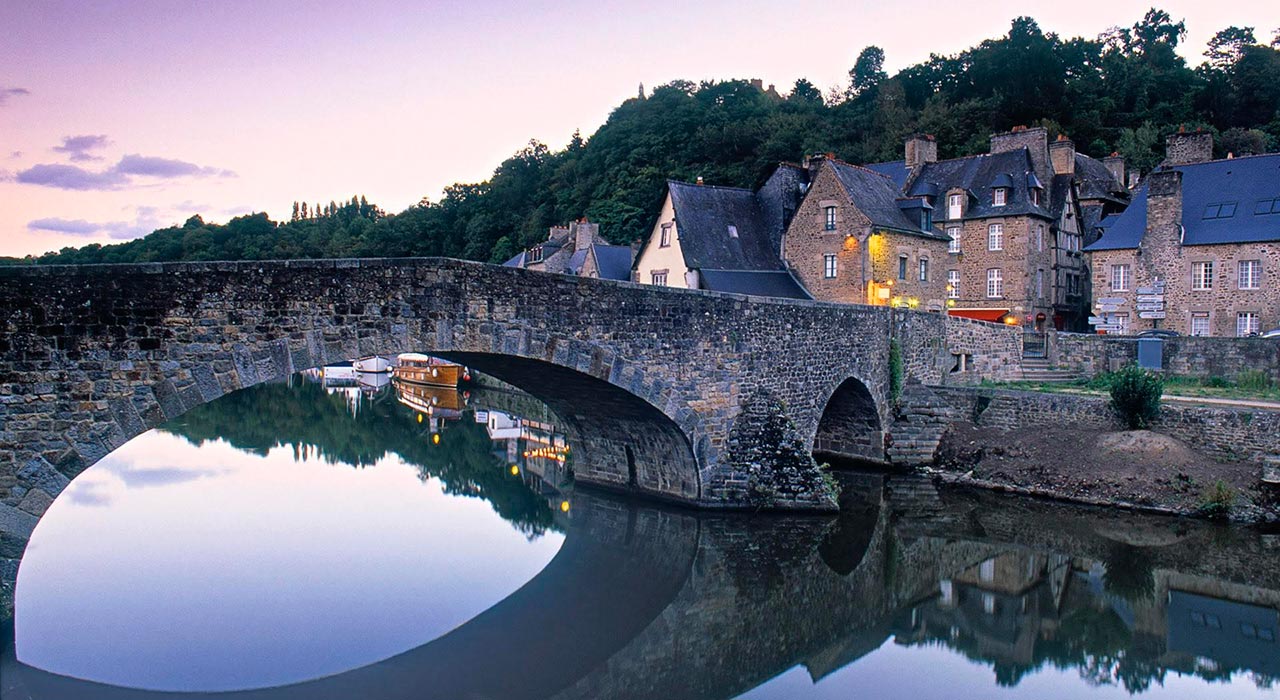
Noyers-sur-Serein. A very picturesque town not far from Chablis. Almost every house is a monument of architecture. The town is surrounded by medieval walls and washed by a picturesque river. All together, it resembles carefully thought-out decorations for a film about medieval life, but this is reality, surpassing any fantasy with its details…
In the town, there is an interesting Museum of Naive Art, the main “donor” of which is Jacques Yankel, a professor-geologist and artist, the son of Russian artist Mikhail Kikoine.
The roads of Burgundy. The landscapes, villages, and towns of Burgundy are picturesque in a distinctly Burgundian way: medieval castles on the slopes of hills, preserved fortress walls in small towns, stone houses in villages (often resembling fortifications), a large number of flowers, multi-layered views, white cows of the local Charolais breed… The journey through this province itself resembles a trip into a fairy tale.


