








Paris is often called the “Capital of the World”. It was founded in the 3rd century BC by the Celts, who called themselves “parisii”. Since then, 23 centuries have passed: settlements of the Gauls, Caesar’s legions, invasions of barbarians, dynasties and regimes, conspiracies and revolutions, great figures of this world and billions of unknowns have created, perhaps, the most beautiful city in the world.
Our Russian-speaking guide in Paris will tell you amazing things and a lot of new and previously unknown information…
Île de la Cité is the island from which Paris begins, where the Cathedral of Notre-Dame (Notre Dame de Paris) and the Holy Church – Sainte-Chapelle, built by Saint Louis to house the crown of thorns of Jesus Christ, rise. Once, the first Roman fortresses stood here, then the castles of the first kings. Now, the majestic Conciergerie stands here – a castle from the early 14th century, built for French kings but eventually turned into a prison, which ultimately became part of the … Palace of Justice. Today, one can attend ongoing trials of famous terrorists or ordinary offenders, walk through the rooms that once served kings. In the 19th century, the prefect of Paris, Baron Haussmann, rebuilt the city, including Île de la Cité. The new buildings of the Palace of Justice, the Hospital, the Commercial Court, the Criminal Investigation Department (where the hero of Simenon’s books, Commissioner Maigret, worked), and the Prefecture changed the face of the island, transforming it from a medieval and picturesque heart of Paris into a majestic administrative center.
The Latin Quarter. Here, up from the Seine, at the top of the hill of Saint Genevieve, grew the Gallic-Roman province of Lutetia, as this hill was not flooded during floods. Now it is a student and restaurant district with preserved buildings from the 13th to the 19th centuries. The boulevards of Saint-Michel and Saint-Germain (both laid out during Baron Haussmann’s time) and the street of Saint-Jacques, which existed already during the Romans in the 1st century AD, structure this ancient part of the city. In the Church of Saint-Séverin (13th century), student assemblies of the Sorbonne once gathered; in the Hôtel de Cluny (15th century) – now a unique museum of medieval art, including the powerful ruins of Roman baths (3rd century).
At the middle of the hill stands the Sorbonne – a university founded in the 13th century, the Collège de France, built in the 16th century by Francis I, the Lycée Louis-le-Grand, among whose students were Voltaire and Robespierre… Finally, at the top of the hill of Saint Genevieve, the Pantheon majestically rises, where Victor Hugo, Voltaire, Rousseau, Zola rest…
Here, starting from the 6th century, there was the monastery of Saint Genevieve, and from it remain the graves of the first king of France Clovis and his wife Clotilde (5th-6th centuries), as well as the dining halls of the 13th century, which now houses the most prestigious lycée in France.
Next to the lycée is a 16th-century church with the remains of the relics of Saint Genevieve – the legendary patroness of Paris, the ruins of a fortress wall from the late 12th century, the Luxembourg Palace (now the Senate) and a garden with statues of queens, regents, artists, writers… Here is also the original statue of Liberty and, probably, the most beautiful fountain in Paris – the Medici Fountain, where a huge cyclops is about to punish the lovers lying in an embrace…
The Marais district begins on the right bank of the Seine and is located between the City Hall and the Place de la Bastille. From the 14th to the 17th centuries, it was the most prestigious district of the city, where kings lived and the mansions of nobles were located. In the 19th century, Baron Haussmann’s renovations did not affect this area, which became impoverished yet still preserved much of its former glory. Today, it is almost impossible to travel through it by bus during the day due to the narrow streets and traffic jams. Therefore, for those interested, we offer a walking tour of the Marais or include this area in the evening excursion.
The Voltaire quay stretches on the other side of the Seine opposite the Louvre: here is the house where the famous philosopher lived and died, and nearby is the building where the famous dancer Rudolf Nureyev spent his last years. On this quay lived the artist Ingres, Herzen… The Louvre, which has been built and rebuilt over the centuries, is next to the royal church, the bell of which sounded the signal for the beginning of the massacre of the Huguenots on the bloody St. Bartholomew’s Night. And of course – the Great Triumphal Way – an axis that runs exactly through the center of Paris and is marked by the most famous buildings, highways, parks, squares – the Louvre Pyramid (20th century), the Arc de Triomphe du Carrousel (19th century), the Tuileries Garden (16th century), the Place de la Concorde (18th century), the Luxor Obelisk (13th century BC), the Champs-Élysées, the Arc de Triomphe (19th century), the Arc de La Défense (20th century)… On a clear day, the entire axis is visible, representing a breathtaking sight! On the opposite side of the Seine is the modern building of the Academy of France. This is the deathbed gift of Cardinal Mazarin, with the money of which the building of the College of Four Provinces was built, where the Academy later moved. Here rests the famous cardinal.
The Musée d’Orsay is a former railway station, the facade of which has been turned into a work of art, as it is located opposite the Tuileries Park. This is the second largest and most significant museum in Paris, representing a collection from the second half of the 19th to the early 20th centuries. Here you can find works not only by the most famous artists and sculptors but also, for example, a canvas by Boris Pasternak’s father…
Next to the museum is a small mansion that houses the museum of the Order of the Legion of Honor. This building is the original White House. Not far from it is another palace – the mansion of Joséphine de Beauharnais. Here, opposite the Louvre, around the monastery of Saint-Germain (which had already been a royal burial place since the 7th century), between the Latin Quarter and the National Assembly is the famous suburb of Saint-Germain, which in the 18th-19th centuries moved from the Marais to the prestigious part of the city. Mansions and palaces, most of which are now ministries and embassies, still adorn this area today.
The National Assembly is the former Petit Palais Bourbon, which had backyards facing the Seine. Napoleon added a portico and gave this back part of the palace a majestic and harmonious appearance. Here is the Lower House of the French Parliament.
From the National Assembly, a bridge leads us to the Place de la Concorde, built from the stones of the fortress of the Bastille, which was dismantled by revolutionaries. During the revolution, guillotines stood in the square, on which more than 1000 people perished, including the king, queen, Robespierre… Now, in the middle of the Place de la Concorde, rises an obelisk from Luxor – a gift from the Egyptian king. This is the oldest monument in Paris, it is 33 centuries old, and the hieroglyphs on it glorify the feats of Pharaoh Ramses II – a contemporary of the prophet Moses. From here, there is a view of the Champs-Élysées, along which colorful festive garlands of cars move.
Along the Rue Royale and the Grands Boulevards ran the city wall, which was built at the end of the 12th century by Philip Augustus to protect Paris from Richard the Lionheart, whose possessions began 80 km from the city. Now, there are the best restaurants in Paris (“Maxim” is far from the first in their row), elite shops, the Grand Opera…
Place Vendôme, where once stood the mansion of the Duke of Vendôme – the son of Henry IV, the center of the most famous jewelry firms. The square was built during the reign of Louis XIV, in its center stands a column erected by Napoleon, with bas-reliefs of his victories, cast from the bronze of Prussian and Russian cannons taken at Austerlitz. In one of the houses, Chekhov stayed, in another Chopin died, in the third Herzen lived… Here, after a failed assassination attempt, Alexander II came to Catherine Dolgorukova, from here, from the Ritz hotel, Lady Di set out to meet tragedy…
The 16th arrondissement is the most prestigious in Paris. Here, often on one floor, there is only one apartment, and the price per square meter is up to 60,000 francs. And, of course, the Champs-Élysées and the Arc de Triomphe, which changes its appearance depending on which of the 12 streets leading to it you approach… Lido, Crazy Horse, famous hotels, restaurants, night bars, shops…
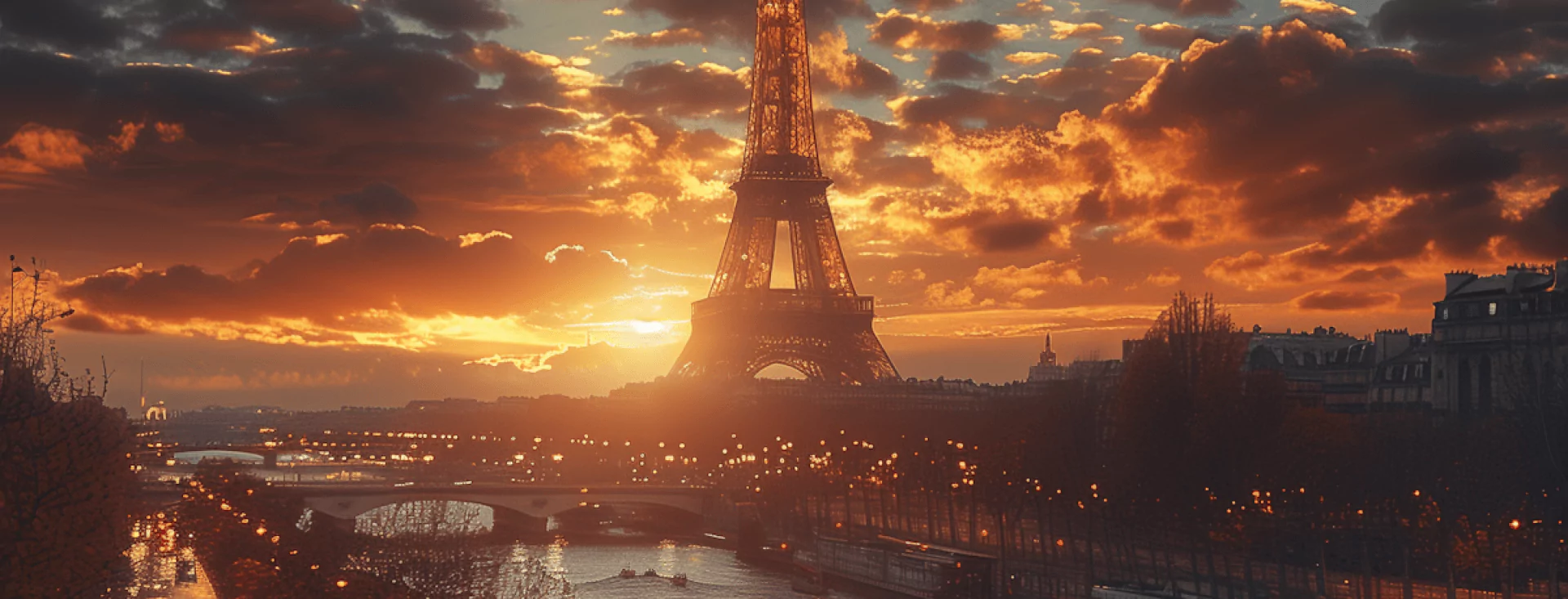
The Trocadéro hill, from where there is a view of Paris and, first of all, the Eiffel Tower. Behind it stretches the Champ de Mars, leading to the Military School (Higher Military School), which Napoleon graduated from… In the distance, to the left of the tower, the dome of the Invalides Cathedral, built by Louis the Great for war invalids, glimmers in gold. In the hospital, which is still operational, lay Zinovy Peshkov, brother of Sverdlov and godson of Gorky… The large church of the Invalides is a military museum, in the cathedral is Napoleon’s tomb. Nearby lie his brothers and son, brought here by Hitler’s personal order, as well as famous French marshals and generals… The city’s beauty is particularly enhanced by its numerous bridges, the most beautiful of which is named after the Russian Emperor Alexander III. It was built for the 1900 World Exposition in Paris, from which two palaces – the Grand and the Petit – have survived, where the Art Gallery, exhibition hall, Slavic department of the Sorbonne, Museum of Scientific Discoveries are now located.
Parisian bridges, Parisian fountains, Parisian cafes, streets, squares, restaurants, museums, parks, shops, theaters…
Such a diverse and remarkably cohesive Paris “is worth a mass”, as King Henry IV said, and he was indeed an expert…


