








ANTIB.
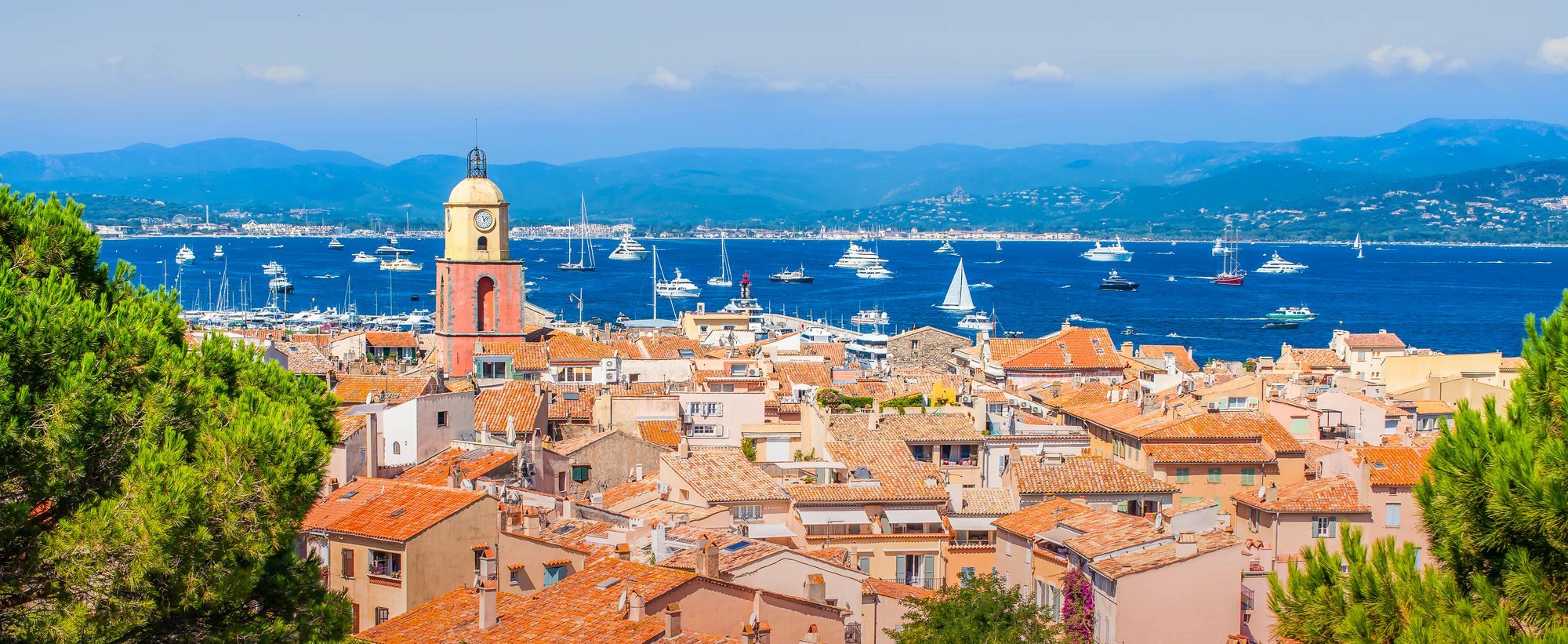
The ancient city of Antibes, located halfway between Nice and Cannes, is one of the most beautiful and ‘characteristic’ cities on the southern coast of France. It was founded by the ancient Greeks in the 4th century BC and was called Antipolis (the city opposite). In the Middle Ages, the city became the episcopal residence by the decision of the Roman Pope. From that moment, the city’s influence began to grow.
In the mid-8th century, Saracen attacks nearly destroyed Antibes. Then came the plague, and the city was completely depopulated. The episcopate moved to Grasse, and the place remained unknown for two centuries. Only in the 14th century, being on the border between France and the Duchy of Savoy, Antibes gained immense importance. Fortifications appeared under Henry IV, who appreciated the strategic significance of the location. It is the only city on the Côte d’Azur that was surrounded by a fortress wall and has completely preserved its heritage and pristine appearance. Antibes has been celebrated many times in poetry and prose, in all languages. Poet Frédéric Mistral wrote about its fig trees. Other poets glorified its roses. The local rose, Sonia, still reigns in the flower market. In the old part of the city stands the castle of the Grimaldi family (1385). Nowadays, on the second floor of the building is the Picasso Museum. From July to December 1946, the great artist worked here, setting up a studio within the medieval walls. Upon leaving Antibes, he gifted the museum a true treasure: 25 monumental canvases, drawings, sketches, and 150 ceramic pieces created in the nearby village of Vallauris.
CAP ANTIB.
The very center of the Riviera is the Antibes cape. Here is located a large number of private villas and estates. Who hasn’t been here! In the past, near the Garoupe lighthouse, the wife of Murphy built a villa, composer Cole Porter rented a castle, and near the lighthouse, Scott Fitzgerald and Ernest Hemingway worked on their books. On the boulevard of Cape Antibes, the villa ‘Tenar’ housed a large Russian family in the 1920s. Here, under the surname Borisov, great Russian princes hid with their wives and children. The head of the family clan was considered to be Nikolai Nikolaevich Romanov. The grandson of Emperor Nicholas I, the Grand Duke was the commander-in-chief of the Russian army in 1914-1915. On Cape Antibes, he lived with his brother Peter Nikolaevich. Their wives – Anastasia Nikolaevna and Milica Nikolaevna were daughters of the Montenegrin King Nicholas. Here, in this small villa, on January 5, 1929, the great Russian prince Nikolai Nikolaevich died. His coffin was covered with the St. Andrew’s flag. The wife of Bunin, Vera Nikolaevna, has memories of that sad Christmas when the memorial service took place: ‘There was a feeling that we were burying the old Russia. Yes, you live as if everything has healed, but as soon as you stumble upon something, it turns out that the wound is exposed, and it hurts, very much.’ Walking along Cape Antibes, you will discover the famous hotel ‘Eden Rock’ or as it is also called ‘Hotel du Cap’. Here is another refuge of the super-bohemians. In Fitzgerald’s novel ‘Tender is the Night’, there is a description of this hotel. ‘On the Antibes cape, a long spit between two seas, in the most wonderful garden where the best flowers of Europe grow, we see again the villas, and at its very end – ‘Eden Rock’, a charming and whimsical building that people come to see from Nice and Cannes.’ This is how Maupassant describes this place, who lived on Cape Antibes in 1885…
GRASSE.
Grasse is the world capital of perfumery, a city of flowers where refined scents are born. It is believed that the name of the city comes from the ‘fat’ local soil, where flowers bloom so willingly. For every Russian, Grasse is primarily associated with the name of Nobel Prize laureate Ivan Bunin. Initially, the writer lived in Paris. But in the summer, unaccustomed, he suffered greatly in the city. On the advice of Parisian jeweler Rosenthal, Bunin moved to Grasse and settled in the villa ‘Belvedere’. Narrow streets, small charming squares with ancient churches, clear air, and at night a huge starry sky… From the hill where the villa is located, there is a view of the distant Esterel mountain range. For the writer, it was a celebration… Only in Grasse is there the Place des Tapis and the Rue de la Rose de Mai. Once, here, in the midst of rose and jasmine plantations, lavender fields, and citrus groves, the genius Coco Chanel invented the composition of her first perfume Chanel No. 5. Long before her, during the time of Catherine de Medici, Grasse entered history as the center of fragrant glove production. They were scented with exotic spices, musk, amber, jasmine, and essential oils. When gloves went out of fashion, glove makers simply became perfumers. Now the city ranks first in the world in the density of noses per square meter. In the Grasse laboratory, with a little desire and a small dose of imagination, any visitor can temporarily try their hand at this most challenging profession and create their own fragrance. If the result is pleasing, the bottle of perfume can be taken home. Each of the 40 perfumery factories in Grasse has its own story. Apothecary Molinar, in pursuit of his own curiosity, secretly created the first two scents ‘Eau de Fleurs’ and ‘Eau de Cologne’ in his pharmaceutical laboratory. In 1849, he put these creations up for sale in a small shop. Bottles labeled Molinar sold so briskly that there was a need to replace the small laboratory with a professional perfumery and the small shop with a boutique ‘Molinar’. In 1900, Molinar built a factory with a metal structure designed by Gustave Eiffel. Following this, a luxurious sales salon in the Provençal style was created to receive English and Russian aristocracy. Queen Victoria herself, on each of her visits to Grasse, loved to receive fragrant water from Molinar as a gift. The zenith of fame was 1921 when the famous fragrance ‘Habana’ was created. Subsequently, it was recognized as the most persistent scent in the world. Soon, the Molinar company began ordering crystal bottles for its creations from glass master René Lalique. She clearly did not go wrong – this only added to the popularity of her perfumes. One of the bottles received the Grand Prix for beauty in 1932. At the time when the Molinar empire flourished in France, revolution raged in Russia. Prince Yusupov and his wife Irina (niece of Nicholas II) were forced to leave their homeland. By fate’s will, they ended up in France, in Grasse. After meeting a local perfumer, Yusupov came up with a name for his fragrance: ‘Irfe’, i.e., Irina plus Felix. Malinar created new perfumes for this name. Soon, leaving France, the couple took this creation with them forever. The formula of the fragrance was lost, and the bottle adorned the collection of the museum at the factory in Grasse until recently.
MARINELAND.
Marineland is the land of the sea, the first marine park in Europe. Here you can see open pools with sea lions, electric rays, sea otters, and other inhabitants of the ocean. Three program performances: with dolphins, with sea lions, and with orcas. For the latter, a wonderful pool with transparent walls, several meters deep, was built not long ago, where these huge whales perform real wonders. The main attraction is the transparent tunnel through the shark pool. The feeling of closeness to these dangerous predators adds sharpness to the impressions. On the park’s territory, there is a sea museum and an aquarium, famous for its variety of marine inhabitants. Pink flamingos hide here in the reeds by the museum, and unflappable pelicans rest in the sun nearby.
Aqua Splash is a fireworks display of pleasures in the open water park with its toboggans, waterfalls, steep slides, and ‘stormy’ sea waves in a regular pool.
The butterfly park is an exotic park with several hundred butterflies flying freely. Iguanas and sea turtles also live here. A small farm and mini-golf.
BIOT.
Charming village on a hill two kilometers from the sea, immersed in the lush bloom of roses, carnations, and (in winter) mimosa. The old part of Biot has preserved its almost pristine appearance. From the central street of Saint Sebastian, you can walk to the fortress gates of 1565. Once, on the ancient Arcade square, there were trading shops. On the church square, a Maltese cross is laid out of colored pebbles. The church itself was built in the 15th century on the site of a Romanesque temple of the 12th century. Above the entrance to the church is a sculpture of Mary Magdalene. Biot is a city of ceramic and glassblowing masters. At the entrance here is an artistic glass factory. In the chapel of white sinners is a ceramics museum.


